How the room shapes the plan
A Jackson room with visible outlines from older patches needs an assessment of more than the latest blemish. Note whether the old edges are raised, whether the paint sheen changes across them and whether the underlying material remains firm. A broad skim treatment may address surface variation, but it is not a substitute for investigating active moisture or movement. Share any history of seasonal changes so the proposal can separate those concerns.
Questions worth resolving early
At a surface receiving strong window light, review a dried trial from the side in addition to the normal straight view of the wall.
For an initial assessment from pictures, provide an overall room photograph and a detailed view of the defect so both context and scale are apparent.
For walls beside bright windows, review a dry sample from an oblique angle as well as looking straight at the repaired surface.
If the coating stability is unclear, assess which layers are adequately bonded and which ought to be removed rather than simply hidden beneath new material.
For a room with restricted airflow, plan drying conditions alongside dust protection and the comfort of people occupying neighboring spaces.
When the same defect has returned, share information about previous repair methods so the next assessment can consider why they did not last.
Where a neat final edge matters, agree whether the finish ends against existing trim or whether that trim will be removed and replaced.
If the surface condition is uncertain, allow for an assessment that can distinguish stable material from layers that should never be covered.
At a repair beside an opening, allow clearance for moving board through the doorway and space to use the finishing tools effectively.
When a wall has repeated defects, keep a record of earlier repair attempts so a new assessment does not simply repeat an unsuccessful approach.
When more damage could be hidden, ask how any added scope will be documented before extra material is removed or replaced.
If there is a fixed move in date, reserve adequate time for the coating stages after drywall work instead of counting only the installation period.
If the proposal requires return visits, identify the purpose of each stage and the intervals during which finishing material needs to remain undisturbed.
For a room that stays in use, set a workable boundary around construction while retaining the access people need for normal daily activities.
If the problem developed after another renovation, explain which nearby materials or building systems changed before the damage became visible.
When comparing competing estimates, make sure their protection, surface finish and disposal allowances describe equivalent work before comparing the final prices.
About the illustrations
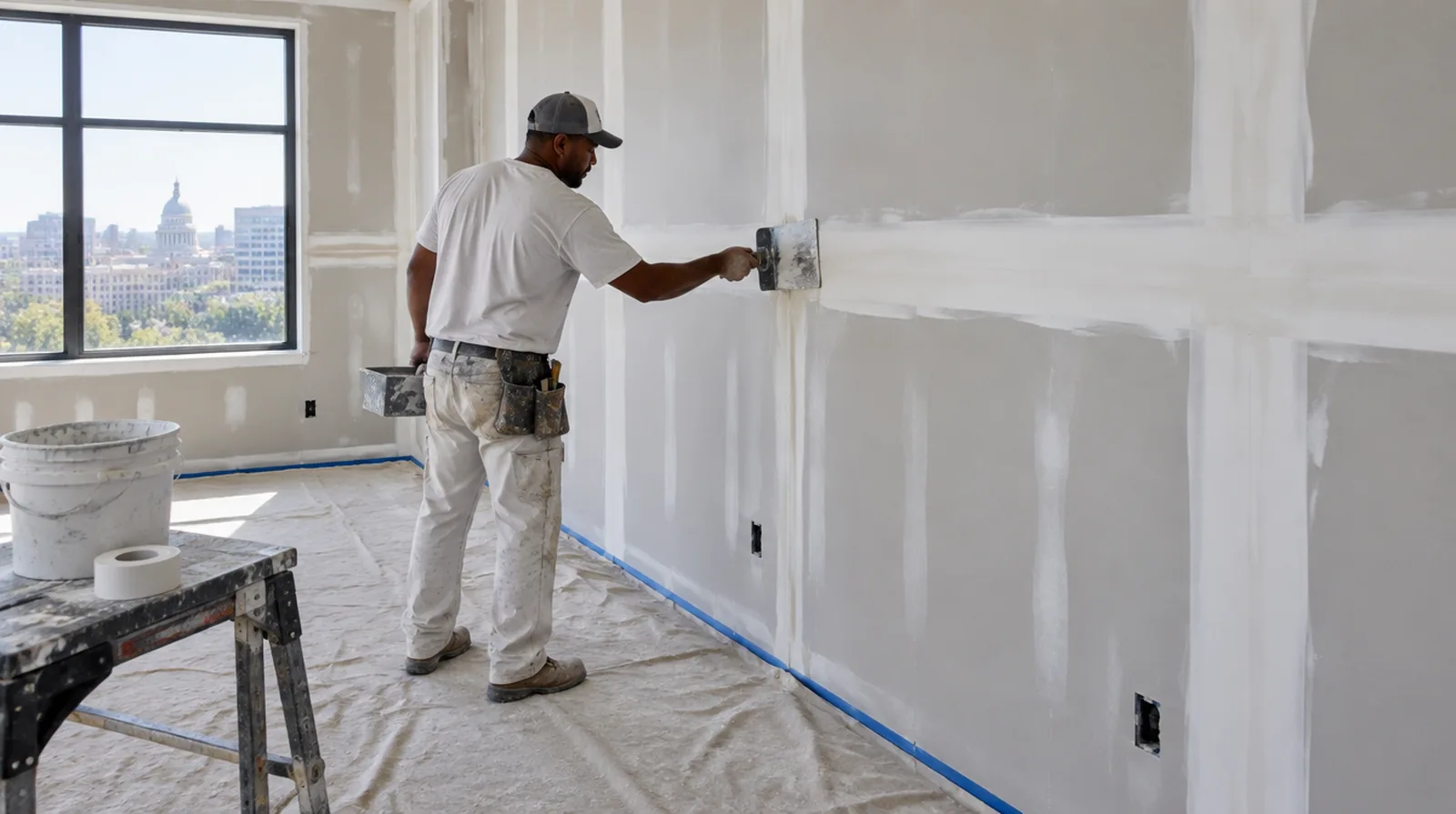
The website images are generated examples of drywall interiors and methods, not photographs of completed customer work. No customer reviews or qualifications are implied. The project form is connected; the telephone remains a placeholder.
Explore the drywall services or view the address and map.
More planning details for Jackson
In humid weather, allow the room to reach suitable working conditions before setting a tight finishing deadline. Protection should include the path through adjacent rooms as well as the immediate floor area. Review the dry surface before decoration and agree who handles small corrections that become apparent after primer is applied.